
Higher education needs to fit around people’s lives, not the other way round
For much of the last century, higher education followed a relatively predictable pattern. People came to university, gained a qualification and built a career. For many, that model still works. Degrees remain fundamental to what universities do and will continue to be so.
Meanwhile, the world of work has changed dramatically.
Across almost every sector, technology is reshaping jobs at an unprecedented pace. Many people will change careers several times during their working lives, moving between employers, sectors and entirely different professions.
The conversations I have with employers reflect this reality. Increasingly, they are not asking about recruiting graduates alone. They are asking how they develop the people they already have.

How do we help experienced managers lead through change? How do we equip healthcare professionals with new skills? How do we support manufacturers adopting new technologies? How do we ensure small businesses can embrace artificial intelligence safely and effectively?
These are no longer occasional questions. Skills development is becoming the defining challenge for organisations across every part of the economy. That presents a challenge for universities too.
If careers are becoming less linear, our relationship with learners cannot remain linear either. Higher education cannot simply be something people experience at the beginning of their careers before moving on. Instead, universities need to become partners in learning throughout people’s working lives.
Put simply, higher education needs to fit around people’s lives, rather than expecting people to fit around higher education.
For some, that will still mean a full-time undergraduate degree. For others, it may mean learning alongside work, family and other commitments.
At DMU, for example, we’ve designed our new Higher Technical Qualifications to be delivered through evening classes because we know many learners simply cannot step away from employment to study during the day. It’s a practical example of a much bigger shift: designing education around people’s lives, rather than expecting people to reshape their lives around education.
The point is not that one route replaces another, it’s that universities need to offer flexible pathways that reflect the different ways people now learn, work and build careers.
This is what we increasingly describe as Extended Education. The terminology is less important than the principle behind it: recognising that universities have an opportunity to support learners whenever education becomes relevant to them, not only at the start of their working lives.
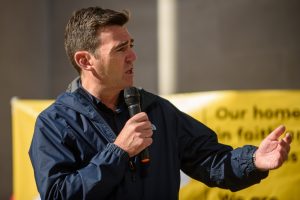
The new Prime Minister, Andy Burnham, is a strong advocate of technical and vocational education. Unlike previous PMs, he doesn’t position this as a fall-back position, but as a real and respected choice, repeatedly advocating for parity between technical, vocational and academic routes. Universities like DMU are part of this solution, already expert in delivering technical and applied programmes with strong industry links, including apprenticeships, Higher Technical Qualifications and many of our degree programmes. We are not an inward-looking institution only focused on traditional academic awards; we are an institution with a strong civic mission, a heritage of developing skills and expertise for local and national industry, and an understanding of the need to provide choices for individuals that give them the next step forward in their careers, whatever moment of life they are at.
At De Montfort University, this thinking sits at the heart of our new strategy. We have deliberately placed Skills and Lifelong Learning at the centre of our future direction because we believe universities have a critical role to play in helping individuals, businesses and communities adapt to change.
That means working much more closely with employers to understand emerging skills needs, developing flexible learning opportunities that people can access alongside work and ensuring our curriculum continues to evolve in response to technological, economic and societal change.
It’s an approach reflected in the recently published Leicester, Leicestershire and Rutland Local Skills Improvement Plan, which identifies employer engagement, digital and AI capability, green skills and flexible, inclusive learning as priorities for our region.
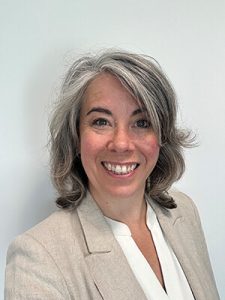
At DMU, we have established new leadership for this agenda through the appointment of a Pro Vice-Chancellor for Extended Education, Jill Cowley, ensuring it is embedded within our strategic thinking rather than sitting alongside it.
As members of Midlands Enterprise Universities, our institutions have always been closely connected to the communities and industries they serve. That gives us an opportunity not simply to respond to the Extended Education agenda, but to help shape it.
The next phase of university innovation may not be defined by a new technology or a single qualification. It may be defined by something much more fundamental: a different relationship between universities, employers and learners. At DMU, that conversation has already begun.
Signed
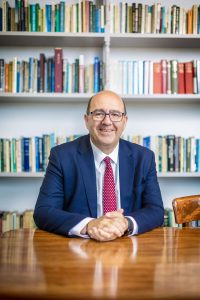
Professor Mike Kagioglou
Deputy Vice-Chancellor Planning, Research & Innovation at De Montfort University


